Class 10 Science Maharashtra Textbook Solutions
28 Feb 2026Periodic Classification of Element Class 10 Science 1 Chapter 2 Questions And Answers Maharashtra Board
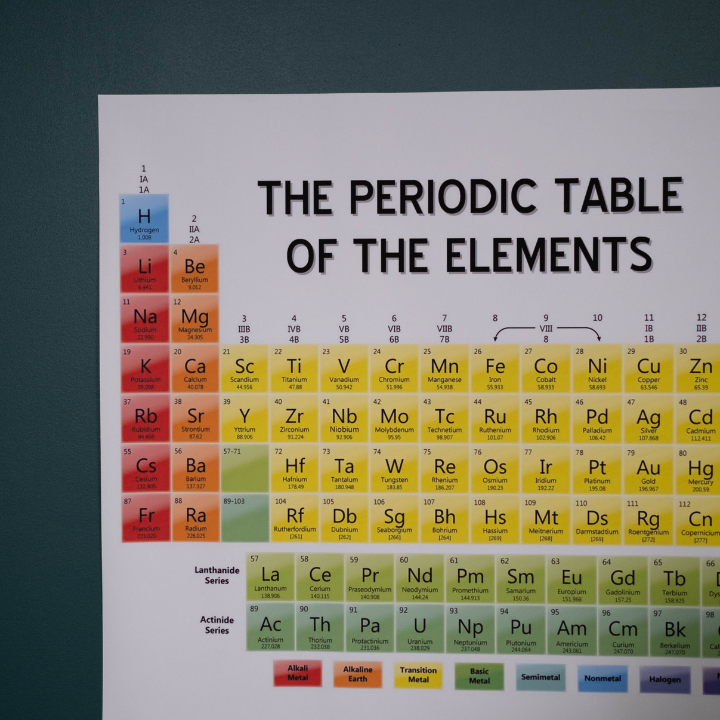
1. Rearrange the columns 2 and 3 so as to match with the column 1. Answer. Column 1 Column 2 Column 3 i. Triad Average of the first and the third atomic mass Dobereiner ii. Octave Properties of the eighth element similar to the first Newlands iii. Atomic number Positive charge on the nucleus Moseley iv. Period Sequential change in molecular formulae Mendeleev v. Nucleus Concentrated mass and positive charge Rutherford vi. Electron Lightest and negatively charged particle in all the atoms Thomson 2. Choose the correct option and rewrite the statement. a. The number of electrons in the outermost shell of alkali metals is……(i) 1 (ii) 2 (iii) 3 (iv) 7 Answer. (a) 1 b. Alkaline earth metals have valency 2. This means that their position in the modern periodic table is in …..(i) Group 2 (ii) Group16 (iii) Period 2 (iv) d-block Answer. (a) Group 2 c. Molecular formula of the chloride of an element X is XCl. This compound is a solid having high melting point. Which of the following elements be present in the same group as X.(i) Na (ii) Mg (iii) Al (iv) Si Answer. (a) Na d. In which block of the modern periodic table are the nonmetals found?(i) s-block (ii) p-block (iii) d-block (iv) f-block Answer. (b) p-block 3. An element has its electron configuration as 2,8,2. Now answer the following questions. a. What is the atomic number of this element? Answer. The atomic number of this element is 12. b. What is the group of this element? Answer. The group of this element is 2. c. To which period does this element belong? Answer. This element belongs to period 3. d. With which of the following elements would this element resemble? (Atomic numbers are given in the brackets)N (7), Be (4) , Ar (18), Cl (17) Answer. This element resembles Be(4). 4. Write down the electronic configuration of the following elements from the given atomic numbers. Answer the following question with explanation. a. 3Li, 14Si, 2He, 11Na, 15P which of these elements belong to be period 3 ? Answer. Elements Electronic configuration (i) 3Li 2,1 (ii) 14Si 2, 8,4 (iii) 2He 2 (iv) 11Na 2, 8, 1 (v) 15P 2, 8, 5 Elements belong to the 3rd period: 14Si, 11Na and 15P. b. 1H, 7N, 20Ca, 16S, 4Be, 18Ar. Which of these elements belong to the second group ? Answer. Elements Electronic configuration (i) 1H 1 (ii) 7N 2, 5 (iii) 20Ca 2, 8, 8, 2 (iv) 16S 2, 8, 6 (v) 4Be 2, 2 (iv) 18Ar 2, 8, 8 Elements belongs to the 2nd group: 4Be and 20Ca. c. 7N, 6C, 8O, 5B, 13Al Which is the most electronegative element among these? Answer. Elements Electronic configuration (i) 7N 2,5 (ii) 6C 2,4 (iii) 80 2,6 (iv) 5B 2,3 (v) 13A1 2, 8,3 Among these, 😯 is the most electronegative element. d. 4Be, 6C, 8O, 5B, 13Al Which is the most electropositive element among these ? Answer. Elements Electronic configuration (i) 4Be 2, 2 (ii) 6C 2, 4 (iii) 😯 2, 6 (iv) B 2, 3 (v) 11Al 2, 8, 3 Among these, 13Al is the most electropositive element. e. 11Na, 15P, 17Cl, 14Si, 12Mg which of these has largest atoms ? Answer. Elements Electronic configuration (i) 11Na 2, 8, 1 (ii) 15P 2, 8, 3 (iii) 17Cl 2, 8, 7 (iv) 14Si 2, 8, 4 (v) 12Mg 2, 8, 2 11Na has the largest atomic size. f. 19K, 3li, 11Na, 4Be Which of these atoms has smallest atomic radius ? Answer. Elements Electronic configuration (i) 19K 2, 8, 8, 1 (ii) 3Li 2, 1 (iii) 11Na 2, 8, 1 (iv) 4Be 2, 2 4Be has smallest atomic radius. g. 13Al, 14Si, 11Na, 12Mg, 16S Which of the above elements has the highest metallic character ? Answer. Elements Electronic configuration (i) 13Al 2, 8, 3 (ii) 14Si 2, 8, 4 (iii) 11Na 2, 8, 1 (iv) 12Mg 2, 8, 2 (v) 16S 2, 8, 6 11Na has the highest metallic character. h. 6C, 3Li, 9F, 7N, 😯 Which of the above elements has the highest nonmetallic character ? Answer. Elements Electronic configuration (i) 6C 2, 4 (ii) 3Li 2, 1 (iii) 9F 2, 7 (iv) 7N 2, 5 (v) 😯 2, 6 9F has the highest non metallic character. 5. Write the name and symbol of the element from the description. a. The atom having the smallest size. Answer. Helium(He). b. The atom having the smallest atomic mass. Answer. Hydrogen(H2). c. The most electronegative atom. Answer. Fluorine(F2). d. The noble gas with the smallest atomic radius. Answer. Helium(He). e. The most reactive nonmetal. Answer. Fluorine(F2). 6. Write short notes a. Mendeleev’s periodic law. Answer. when the elements are arranged in the order of their increasing atomic masses, Mendeleev found that the elements with similar physical and chemical properties repeat after a definite interval. On the basis of these finding Mendeleev stated the periodic law. The physical and chemical properties of elements are a periodic function of their atomic masses. b. Structure of the modern periodic table. Answer. (1) In the modern periodic table, the elements are arranged in the order of their increasing atomic number. In the modern periodic table there are seven horizontal rows called periods and eighteen vertical columns (1 to 18) called groups. The arrangement or the periods and groups results into formation of boxes. Atomic numbers are serially indicated in the upper part of these boxes. (2) Each box represents the place for one element. Apart from these seven rows, there are two rows of elements placed separately at the bottom of the periodic table. They are lanthanides and actinides series. There are 118 boxes in the periodic table including the two series that means there are 118 places for elements in the modern periodic table. The formation of a few elements was established experimentally very recently and thereby the modern periodic table is now completely filled with 118 elements. (3) On the basis of the electronic configuration, the elements in the modern periodic table are divided into four blocks, viz. s-block, p-block, d-block and f-block. The s-block constitute groups 1 and 2. The groups 13 to 18 constitute the p-block. Groups 3 to 12 constitute the d-block, while the lanthanide and actinide series at the bottom form the f-block. The d-bloclçelements are called transition elements. A zig-zag line shown in the p-block of the periodic table. This zig-zag line shows the three traditional types of elements, i.e. metals, nonmetals and metalloids. The
Read article