
Class 10 | Lenses

Flash Card

A convex lens of short focal length held very close to the eye, to observe minute objects clearly is called as

1/50

Retina of eye corresponds to which part of camera?

2/50

For the same thickness of the lens, if the radius of curvature is increased, the focal length will

3/50

When the distance between the eye-lens (crystalline-lens) and retina is more, the normal distance image is formed in front of the retina, such an eye defect is called as

4/50

The direction of the ray passing through a lens changes because of the

5/50

There is a small hole of changing diameter at the centre of the iris which is called

6/50

For a specific glass lens f = 0.5 m. This is the only information given to the student. Which type of lens is given to him and what is its power?

7/50

Defective refraction by the lenses causes

8/50

The ............. cells respond to the colour and give information about the colour of the object to the brain.

9/50

............ is a combination of two convex lenses with small focal length.

10/50

A convex lens forms a virtual image of an object placed ............. .

11/50

A person suffering from hypermetropia

12/50

At what distance a watch maker must hold his lens from the watch?

13/50

A type of lens which has two spherical surfaces which are puffed up outwards is .............. .

14/50

Which of the following is wrong? Here M represents magnification of a lens.

15/50

A ............... lens always produces virtual and diminished image.

16/50

Magnification of the lens is always positive for

17/50

According to Cartesian sign conventions, all the distances are measured from the

18/50

A ray of light gets refracted ............... while entering the lens

19/50

The focal length of a concave lens, according to Cartesian sign conventions is

20/50

Bifocal lens is required to correct ............... defect.

21/50

The compound microscope is used to see

22/50

The image obtained while finding the focal length of convex lens is

23/50

When we see an object, the image formed on the retina is

24/50

The power of spectacles for hypermetric person

25/50

In relaxed position of eye muscles, the focal length of healthy eye lens is about

26/50

An object is kept at 20 cm from a convex lens of focal length 15 cm. The position of the image is

27/50

Principal focus of a magnifying glass is

28/50

When two lenses are kept touching each other, the power of the combined lens is equal to

29/50

The colour of the eye is determined by

30/50

The capacity of the lens to change its focal length as per need is called as

31/50

For a myopic eye, the defect is cured by .............. .

32/50

A focal length of a lens is 20 cm. What is power of a lens in dioptre?

33/50

A student obtained a clear image of window bars on a screen with the help of a convex lens. But in order to have the best image, his teacher suggested him to obtain the image of a distant tree. Where will the lens have to be moved in order to obtain a clear image?

34/50

The capacity of a lens to converge or diverge incident rays is called .............. of the lens.

35/50

............ helps the eye lens to adjust the focal length depending on the distance of the object by contracting or relaxing.

36/50

The point inside the lens on the principal axis through which light rays pass without changing their path is called

37/50

Colour blindness indicates lack of

38/50

To obtain an image of the same size as that of an object using a convex lens, the object should be placed

39/50

The farthest distance of an object from a human eye, at which it is clearly visible without stress on the eye is called
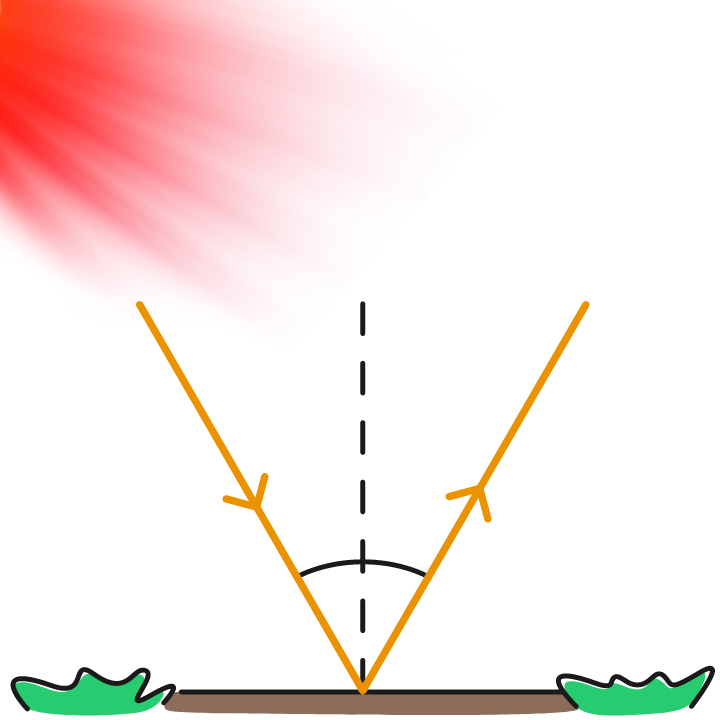

40/50

A type of lens which is thinner at centre than at edges is........ .

41/50

An object is placed at a distance of f/2 from a convex lens of focal length f. The image will be

42/50

Power of lens is

43/50

An optical instrument, in general, extends our range of vision by

44/50

The minimum distance of an object from a human eye, at which it is clearly visible without stress on the eye is called

45/50

Distance between optical centre and centre of curvature is called as .............. ..

46/50

For the normal human eye, minimum distance of distinct vision is ............. cm.

47/50

If magnification of a lens is 10 then which of the following is correct?

48/50

The final image produced by a simple microscope is

49/50

People suffering from both myopia and hypermetropia, needs ............. lens

50/50
Lenses

Class 10 | Lenses

1 / 50

The capacity of the lens to change its focal length as per need is called as

2 / 50

For the same thickness of the lens, if the radius of curvature is increased, the focal length will

3 / 50

For the normal human eye, minimum distance of distinct vision is …………. cm.

4 / 50

An optical instrument, in general, extends our range of vision by

5 / 50

A type of lens which is thinner at centre than at edges is…….. .

6 / 50

Bifocal lens is required to correct …………… defect.

7 / 50

In relaxed position of eye muscles, the focal length of healthy eye lens is about

8 / 50

A person suffering from hypermetropia

9 / 50

For a specific glass lens f = 0.5 m. This is the only information given to the student. Which type of lens is given to him and what is its power?

10 / 50

The power of spectacles for hypermetric person

11 / 50

When we see an object, the image formed on the retina is

12 / 50

The final image produced by a simple microscope is

13 / 50

The farthest distance of an object from a human eye, at which it is clearly visible without stress on the eye is called

14 / 50

To obtain an image of the same size as that of an object using a convex lens, the object should be placed

15 / 50

At what distance a watch maker must hold his lens from the watch?

16 / 50

The …………. cells respond to the colour and give information about the colour of the object to the brain.

17 / 50

The compound microscope is used to see

18 / 50

There is a small hole of changing diameter at the centre of the iris which is called

19 / 50

People suffering from both myopia and hypermetropia, needs …………. lens

20 / 50

Colour blindness indicates lack of

21 / 50

Which of the following is wrong? Here M represents magnification of a lens.

22 / 50

The point inside the lens on the principal axis through which light rays pass without changing their path is called

23 / 50

The image obtained while finding the focal length of convex lens is

24 / 50

The colour of the eye is determined by

25 / 50

The capacity of a lens to converge or diverge incident rays is called ………….. of the lens.

26 / 50

An object is placed at a distance of f/2 from a convex lens of focal length f. The image will be

27 / 50

A ray of light gets refracted …………… while entering the lens

28 / 50

The direction of the ray passing through a lens changes because of the

29 / 50

Defective refraction by the lenses causes

30 / 50

A student obtained a clear image of window bars on a screen with the help of a convex lens. But in order to have the best image, his teacher suggested him to obtain the image of a distant tree. Where will the lens have to be moved in order to obtain a clear image?

31 / 50

The minimum distance of an object from a human eye, at which it is clearly visible without stress on the eye is called

32 / 50

Power of lens is

33 / 50

A …………… lens always produces virtual and diminished image.

34 / 50

When two lenses are kept touching each other, the power of the combined lens is equal to

35 / 50

A convex lens of short focal length held very close to the eye, to observe minute objects clearly is called as

36 / 50

Magnification of the lens is always positive for

37 / 50

For a myopic eye, the defect is cured by ………….. .

38 / 50

………… is a combination of two convex lenses with small focal length.

39 / 50

If magnification of a lens is 10 then which of the following is correct?

40 / 50

Principal focus of a magnifying glass is

41 / 50

………… helps the eye lens to adjust the focal length depending on the distance of the object by contracting or relaxing.

42 / 50

Retina of eye corresponds to which part of camera?

43 / 50

An object is kept at 20 cm from a convex lens of focal length 15 cm. The position of the image is

44 / 50

According to Cartesian sign conventions, all the distances are measured from the

45 / 50

Distance between optical centre and centre of curvature is called as ………….. ..

46 / 50

The focal length of a concave lens, according to Cartesian sign conventions is

47 / 50

A focal length of a lens is 20 cm. What is power of a lens in dioptre?

48 / 50

A type of lens which has two spherical surfaces which are puffed up outwards is ………….. .

49 / 50

When the distance between the eye-lens (crystalline-lens) and retina is more, the normal distance image is formed in front of the retina, such an eye defect is called as

50 / 50

A convex lens forms a virtual image of an object placed …………. .

Your score is

The average score is 60%

0%

EasyLearning |

Talk to a counsellor now!

X
Scroll to Top