
1. Identify the precipitation type with the help of the description given:
(a) It is the main source of the water that you use. Sometimes it is torrential and sometimes continuous. Most of the agriculture in India is dependent on it.
Answer. Rainfall
(b) It seems as if water droplets are floating in the atmosphere. In London, one cannot see the Sun till the afternoon during winters because of this phenomenon.
Answer. Fog
(c) It never precipitates like this in equatorial areas. Precipitation in the solid form sometimes causes damage to the crops.
Answer. Hail
(d) A white cotton like layer spreads on the earth’s surface. Because of this form of precipitation, the State of Jammu and Kashmir has to change its capital in winters. In Maharashtra, it does not precipitate like this.
Answer. Snow

2. Look at the following pictures and identify the correct rainfall type.
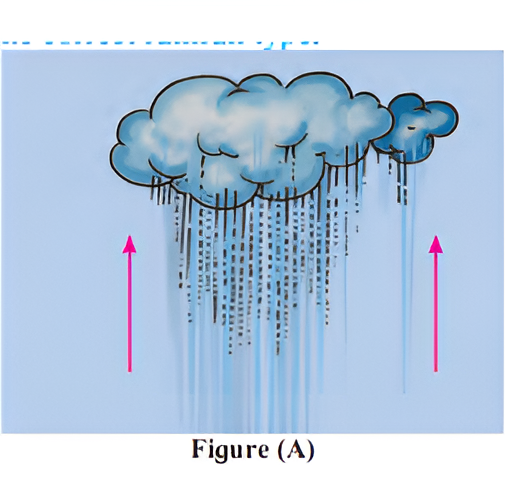
Answer. Convectional rainfall
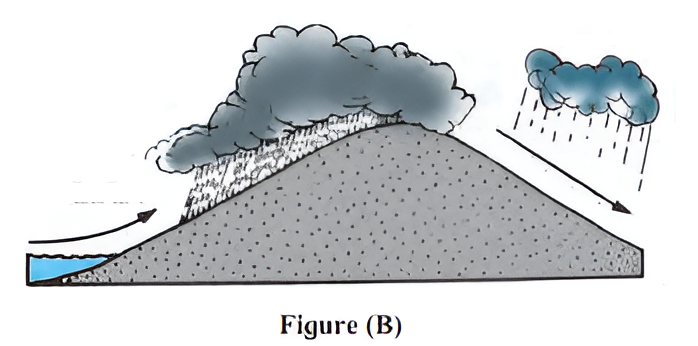
Answer. Orographic rainfall
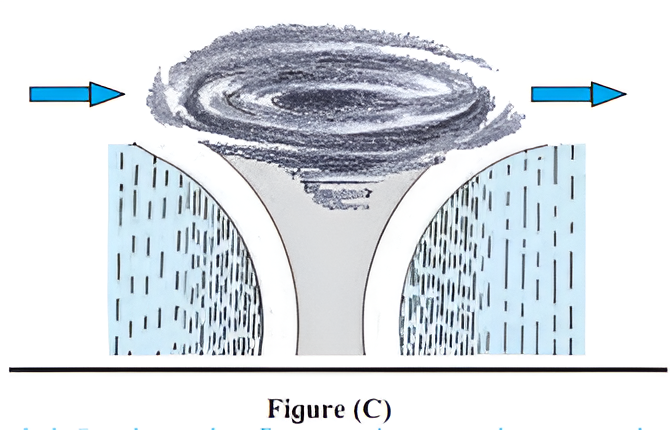
Answer. Cyclonic rainfall
3. Look at the figures above and answer the following questions:
(1) In fig B, on which side of the mountain is it raining more?
Answer.
The windward side is receiving more rainfall.
(2) Shade the rain shadow region in fig B and name it.
Answer.
The rain shadow region is on the leeward side of the mountain in Figure B.
(3) What is the difference between A and C ?
Answer.
Convectional (A) is heat-induced; Cyclonic (C) is pressure-induced with storms.
- Figure A shows convectional rainfall, caused by heated air rising and cooling in equatorial areas.
- Figure C shows cyclonic rainfall, caused by low-pressure systems where air converges and rises.
- Convectional is heat-driven and local, while cyclonic involves larger weather systems and storms.
(4) Stormy winds and floods are associated with which rainfall type?
Answer.
Stormy winds and floods are associated with Cyclonic rainfall.
(5) What type of rainfall occurs in Singapore?
Answer.
Convectional rainfall occurs in Singapore.
4. Identify the odd man out :
(1) Orographic rainfall, acid rain, cyclonic rainfall, convectional rainfall
Answer. Acid rain
(2) Snowfall, rainfall, hailstones, dew
Answer. Dew
(3) Thermometer, rain gauge, anemometer, measuring jar
Answer. Measuring jar
5. Answer in brief:
(1) In what ways does precipitation occur on the earth ?
Answer.
Precipitation means water falls in the solid or liquid state from the clouds to the earth surface. Snow, hailstorms, rainfall are the major forms of precipitation.
(i) Snow:
- When the temperature in the atmosphere falls below the freezing point the water vapour directly turns into snowflakes. This is called sublimation.
- Hence the vapour in the form of gas transform into solid snow. Precipitation in the form of solid particles is known as snowfall.
- As snow is in the solid form. It does not run like water and layers of the snow get deposited on the top of the others and when the snow melts the region gets fresh water.
(ii) Hail:
- When there is lot of heat on the earth’s surface, the upward air flow blows at a greater speed. Because of this upward flow, the temperature of air reduces and the condensation of the water vapour takes place, and dark clouds are formed.
- Because of the upward movement of the air, these water droplets go at higher altitude and solidify forming hailstones.
- As the hailstones are heavy, they fall toward the earth’s surface because of gravity. The crops may get destroyed and loss of life and property may occur.
- Hailstones occurs in summer in India, Africa and in some parts of south east Asia.
(iii) Rainfall:
- We get water generally in the form of rainfall. The temperature of the air with water vapour reduces when it goes higher and condensation of the vapour occurs.
- Clouds formed with the condensed water droplets and dust particles accumulate.
- As these water droplets increase in the size, they cannot float in the air anymore because of their weight. They come down as rainfall
- The different types of rainfall are: Convectional rainfall, Orographic rainfall and Cyclonic rainfall.
(iv) Fog, dew and frost:
- When the condensation or solidification of the water vapour in the atmosphere occurs near the earth’s surface, it leads to the formation of fog, dew and frost.
(2) Comment on the rainfall occuring in the rain shadow area.
Answer.
- The winds coming from lakes or seas are moisture-laden and they are obstructed by the high mountain ranges coming in their way
- They start going upwards along the slope of the moutains. The temperature of these winds drop and condensation occurs and rainfall takes place.
- This rainfall takes place because of the obstruction of the mountains which results in the condensation of water vapour.
- The windward side of the mountain gets more rain; the amount of vapour in the air reduces after crossing the mountain and the moisture-holding capacity of the air increases.
- The leeward side of the mountain gets lesser rainfall as compared to windward side.
- Thus, the leeward side area is identified as rain shadow area as it recieves meagre rainfall.
(3) Which type of rainfall occurs in most of the world? Why?
Answer.
- Orographic rainfall occurs in most parts of the world.
- Convectional rainfall is regional in nature.
- There is a certainty in the convectional rainfall occurring in the equatorial areas.
- Comparatively, the orographic and cyclonic rainfall is less certain.
- And therefore, such areas are prone to very heavy rainfall, floods or droughts frequently.
(4) If condensation occurs closer to the earth’s surface, what types of forms become visible ?
Answer.
If condensation and solidification of the water vapour in the atmosphere closer to the earth surface are visible, they are in the form of fog, dew or frost.
(i) Fog:
- The temperature of the layers of the air near the surface of the earth reduces. As the temperature reduces, water vapour condenses.
- In this process the water vapour turns into microscopic water particles and float in the air.
- When the density of these droplets in the air increases it leads to the formation of fog
(ii) Dew:
- When moisture-laden air near the earth surface comes in contact with very cold objects condensation of water vapour takes place.
- They turn into very small water droplets and stick to the surface of cold objects, e.g. eg: leaves and this is called dew.
(iii) Frost:
- When the temperature of the air reaches less then 0 degree Celcius the water droplet stuck to the surface of the cold objects and freezes.
- This frozen water droplet is called as frost.
(5) What precautions should be taken while measuring rainfall?
Answer.
- Rainfall is an important source of water on planet earth and rainfall is formed because of changes in the temperature of the air with water vapour.
- The instrument that is used to measure rainfall is called rain gauge.
- The funnel i.e. used for measuring rain has a specific diameter and the rain falling in this funnel is collected in bottle fitted in the gauge.
- The collected water is then measured with the help of measuring jar. In the areas of heavy rainfall, the reading of the rain with rain gauge should be taken every three hours. The measuring jar reads rain in millimetres
- The gauge has to be kept on open ground on 30cm high flat-mount.
- So that the rain water is collected without any obstruction.
6. Distinguish between –
(1) Dew and frost
Answer.
| Dew | Frost | ||
| (i) | When moisture-laden air near the earth’s surface comes into contact with very cold objects, condensation of vapour takes place into small water droplets called dew. | (i) | If the temperature of the air is less then CPC, the water droplets stuck to the surface of cold objects, freezes forming frost. |
| (ii) | Water vapour condenses and forms droplets of water. | (ii) | Water droplets stuck to cold surface turns to frozen water droplets. |
| (iii) | Dew sticks to the cold object but does not freeze. | (iii) | It sticks to the cold object and freeze. |
(2) Snow and hail
Answer.
Snow | Hail | ||
| (i) | Precipitation in the form of solid particles of snow is known as snow fall. | (i) | Precipitation in the form of frozen water droplets falling rapidly to the ground is know as hail. |
| (ii) | The fall of temperature in the atmosphere below the freezing point causes snow fall | (ii) | Extreme heat on the surface of the earth initiates the process of hail formation. |
| (iii) | Heavy accumulation of snow can collapse the transportation and communication system of the area. | (iii) | It destroys crops and causes loss of life. |